Mole-Kraken
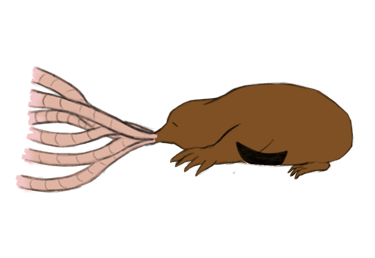
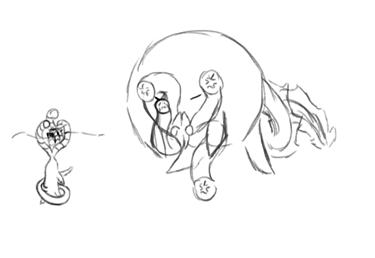
The middle of the desert is a dangerous place. Seemingly an empty wasteland full of sandy waves that stretches on as far as the eye can see, but beneath the sand lies dangerous creatures waiting to attack anything that approaches. I wanted to create an animal to show this, which is why my first animal was a monster. Inspired by the myth of the Mongolian Death Worm from the Gobi Desert, one of my primary inspirations, and the Kraken, a classic ocean myth, this is a blind monster with the body of a mole (based on the Star-Nosed Mole) to dig through sand which uses long worm-like feelers to sense, attack, and eat its prey.
Animal & Plant Design
The wildlife in an environment are what define and bring it to life. The tone of a calm environment can completely change when its filled with dangerous wildlife, and vice verse. The people who live in an environment are also largely defined by the animals and plants they have at their disposal and what they can provide for the people. Creating interesting wildlife was essential for making the desert feel alive.
Sheep
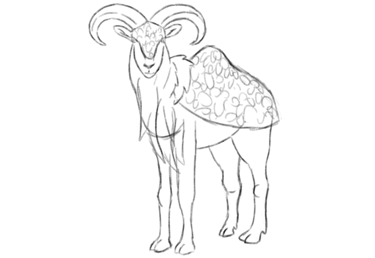
The desert sheep are the staple livestock that the people of the desert rely on. They can both climb on the sheer mountains at the edges of the desert, or swim through it's sandy waves. Desert nomads herd and trade resources they get form the sheep, which include fur, mlk, meat, tools carved from horns, and even armor from their tough shells.
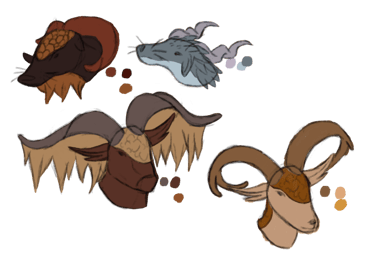
The sheep have the most variety in their designs out of any animal I designed. All their designs were inspired by the Barabary Sheep as a base, but each was also uniquely inspired by a variety of other animals, including buffalo, pangolin, armadillos, deer, camels, and seals.
Worm Feelers
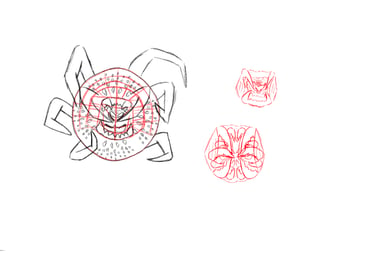
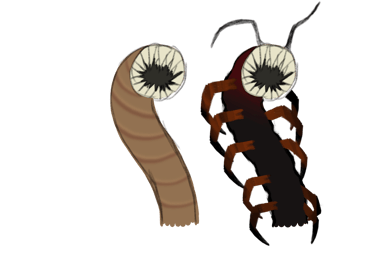
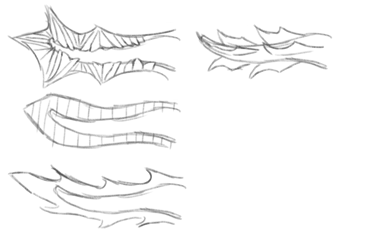
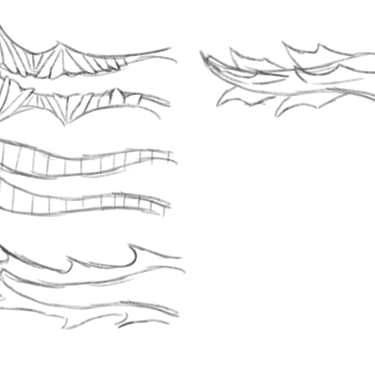
The worms used to find and attack prey had two versions, one inspired by classic earthworms, the other inspired primarily by Chinese Red-Headed Centipedes, a centipede with a potent venom that more closely resembles the Mongolian Death Worm, which is often described it as a red worm that spits toxic venom. In both versions, the mouth is inspired by the Sea Lamprey, a parasitic fish that latches onto and feeds off of other fish.
Early Design
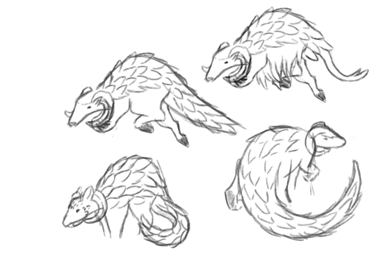
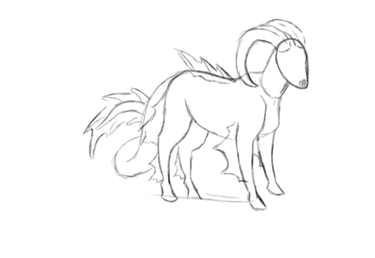
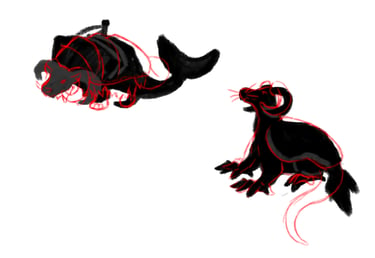
I started creating the early designs using silhouettes. By using big blocks of shape, I can focus on the animals overall shape and creating interesting design elements that catch the eyes without worrying about details. Many of the early designs were much more aquatic, featuring fins and fish-like tails, before I pivoted to land animals and sea mammals instead.
Write your text here...
Originally, the mole had a tadpole inspired tail, here are some variations of that idea.
In some versions, the centipede legs are only around its mouth. These act as both antennae sensing vibrations in the sand, and tools to grab and put food in its mouth.
Fennec-Lizard
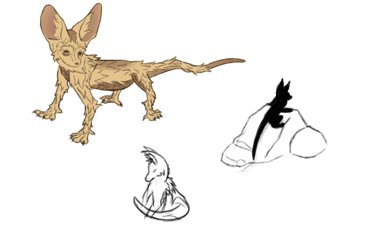
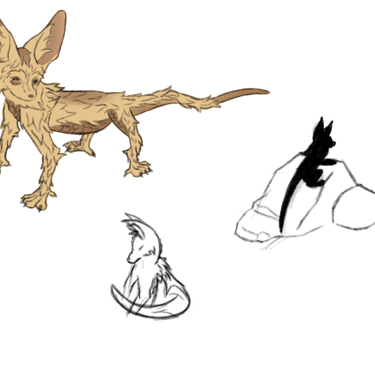
The last animal is a common animal found in the mountains. I wanted to create an animal seen regularly in everyday life that doesn't serve a significant purpose like the sheep or kraken, other than being a part of the ecosystem. I thought this would make the environment feel more alive by having animals that aren't meant to impact the people living in it in a significant way. This animal is inspired by a Fennec Fox, and desert lizards like the Thorny Devil and Desert Horned Lizard, they like laying in the sun and getting scratched behind its ears.
Pitcher Island Plant
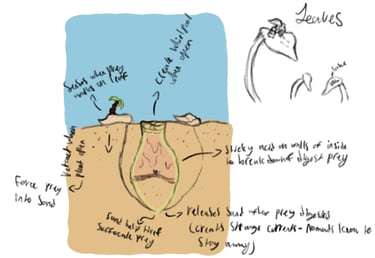
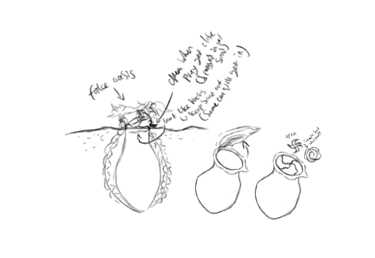
My first plant was based off carnivorous pitcher plants, plants that trap insects in tube-shaped leaves where they're digested. This plant uses leaves that look like islands to lure animals and people looking for rest in. It then lowers its leaves forcing its prey into the sand on opens its mouth, creating a sand whirpool and sucking anything in its vacinity in.
Stalk Plant
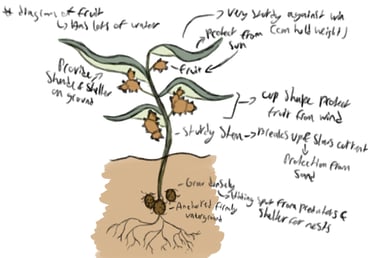
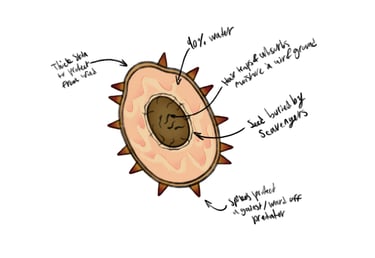
This plant was based off kelp, and was created to support life. With strong stems that disrupt large waves and create a calm environment, large leaves that protect from the sun, and fruit that provides water, these plants grow together in large clusters creating dense forests full of life.